Trouble with skin: Do parents understand the impact skin conditions have on children’s quality of life?
Downloads
DOI:
https://doi.org/10.26326/2281-9649.36.3.2931How to Cite
Abstract
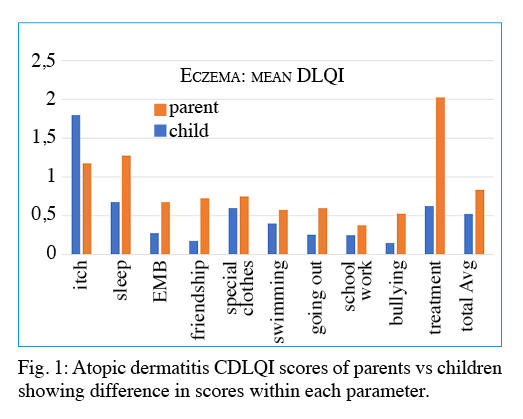
Paediatric skin conditions can have a negative impact on the quality of life in patients and their families. The children’s dermatology life quality index score (CDLQI) and the cartoon CDLQI were initially designed and published in 1995. Prior to 1995 there were no well-validated instruments that assessed children’s quality of life in relation to dermatological disease. These questionnaires can be used in children aged 4 to 15 years and 11 months and consist of 10 questions that aim to measure the impact of any skin disease on the lives of children. Often the parent or guardian will fill these questionnaires out on their own, basing their answers on how they feel the disease is impacting the child. Basra and Finlay first proposed the concept of the “Greater patient”. This concept describes the group of people close to the patient who are affected by his/her health condition. The burden atopic dermatitis and psoriasis has on family members has been well described. When assessing the CDLQI of children it is important to get the child’s viewpoint and not just the parents. Measuring the impact a skin condition has on a child is important for clinical management and can guide treatment plans and inform resource allocation decisions.